

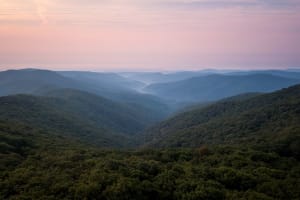


















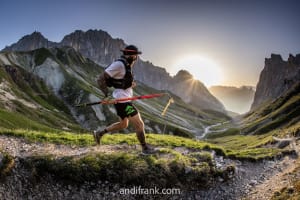



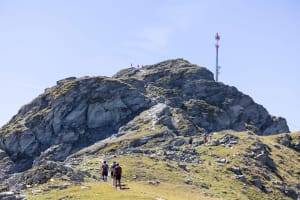
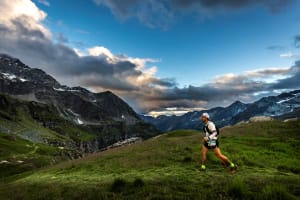

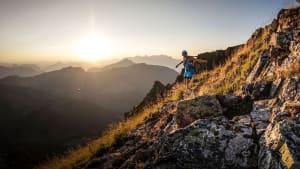








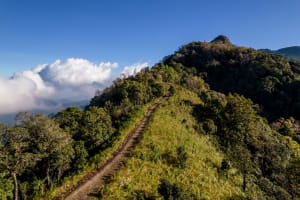

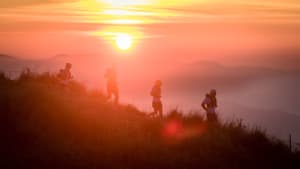



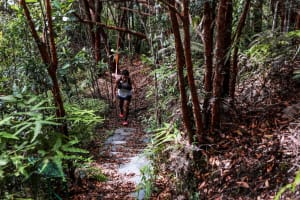

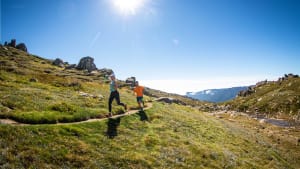

The Trail Alsace by UTMB takes place in the heart of an exceptional natural environment. Renowned for the beauty of its landscapes and the richness of its biodiversity, Alsace is home to remarkable-and sometimes fragile-natural habitats.
The race organization is committed to preserving these natural areas and raising awareness among runners and spectators about their protection. Trail running in these environments is only possible through a balance between sport, nature, and respect for ecosystems.
Close collaboration with local stakeholders
Several actions are implemented:
designing the courses in consultation with natural area managers and government authorities
adapting routes to avoid the most sensitive areas
implementing precise course marking and appropriate signage
managing and sorting waste
raising awareness among participants and volunteers
These actions are part of a broader approach aimed at reconciling outdoor sports, respect for local areas, and the preservation of biodiversity.
A remarkable natural territory
Created to protect and enhance the natural, landscape, and cultural heritage of the massif, the Vosges Mountains Regional Natural Park covers nearly 3,000 km² across several departments in the Grand Est and Bourgogne-Franche-Comté regions.
This territory is characterized by a great diversity of natural environments:
vast Vosges forests
high-altitude pastures
peat bogs and wetlands
glacial lakes
valleys and agricultural landscapes
These environments are home to rich wildlife and plant life, including many species that are sensitive to disturbance.
Preserving this biodiversity is a major challenge for local stakeholders, including the Regional Natural Park, municipalities, natural area managers, and sports event organizers.
Natura 2000: protecting European biodiversity
Part of the Trail Alsace by UTMB route crosses or runs alongside sites within the Natura 2000 network.
Created by the European Union, Natura 2000 aims to preserve remarkable natural habitats and species while allowing human activities that are compatible with their protection.
In the Vosges Mountains Regional Natural Park, nearly a quarter of the territory is classified within this network.
These sites help preserve, in particular:
ancient mountain forests
peat bogs and wetlands
high-altitude grasslands
several species of rare birds and mammals
The preservation of these environments requires special care during outdoor activities.
Lac Blanc Area (100M start)
The Lac Blanc area is one of the emblematic natural sites of the Vosges massif.
Heavily visited throughout the year, this area is also home to sensitive natural environments, including high-altitude forests and wetlands.
To help preserve these areas:
runners must strictly stay on marked trails
cutting switchbacks or leaving the course is prohibited
spectators are asked to remain within designated areas
“Natura 2000 Area and Quiet Zone Fréland - Grand Brézouard - Aubure (100M)”
The massif around Grand Brézouard, between Fréland and Aubure, is a forest area with significant environmental sensitivity. The 100M course has therefore been designed to avoid the most sensitive zones.
This area is part of the Natura 2000 network and also includes quiet zones established to limit disturbance to certain species.
Among them is the Western capercaillie, an emblematic bird of the Vosges massif whose populations are now very fragile.
In this area, it is essential to remain on the marked course.
“Thannenkirch Natura 2000 Area (100M)”
The forests and natural environments around Thannenkirch are also part of a Natura 2000 site.
This area plays an important role in the massif’s biodiversity, particularly as an ecological corridor between different forest valleys and due to the presence of a bat site in the Upper Rhine Vosges.
Respecting the trails and limiting noise disturbance are essential to preserve the tranquillity of wildlife.
Former Niedermunster Abbey
Located below Mont Sainte-Odile, this section of the 100M course, at the former Niedermunster Abbey, will be a no-stop zone for approximately 1 km.
This area corresponds to a particularly sensitive water catchment site, where the risk of groundwater pollution through infiltration is high.
To help preserve this resource, runners will be asked not to stop, particularly to avoid relieving themselves or emptying flasks.
The Quietude Attitude Program
The Trail Alsace by UTMB is part of the Quietude Attitude initiative led by the Vosges Mountains Regional Natural Park.
This program aims to raise awareness among outdoor activity practitioners-hikers, trail runners, mountain bikers, and skiers-about the importance of preserving wildlife tranquillity.
In the mountains, many species are sensitive to disturbance, particularly during winter and breeding periods. Noise, repeated passage, or leaving marked trails can cause stress and force animals to flee.
Adopting a respectful attitude toward nature helps preserve this fragile balance.

2026 marks the thirtieth anniversary of Natura 2000 coordination in the Parc naturel régional des Ballons des Vosges. Since its creation in the 1990s, this European network has had a single objective: to combine biodiversity and regional development. Today, the Park manages 28 Natura 2000 sites that cover nearly 80,000 hectares. Iconic territories for outdoor sports, these sites also host numerous sporting events.
Sporting appeal and biodiversity preservation
This anniversary is an opportunity to highlight the commitment of event organizers who work hand in hand with the Park by :
engaging in dialogue ahead of event organization,
proposing routes and markings that respect species and natural environments,
sharing codes of good practice with runners and accompanying persons.
More than 250 sporting events each year in the Park
Eleven years ago, the Park created a position dedicated to the management of natural area usage. Since then, the number of events it supports, the enthusiasm for the massif and the number of participants have continued to grow. Today, more than 250 events take place each year in the Park and more than half of them pass through Natura 2000 sites. This partnership with organizers demonstrates that sport can be a means of raising awareness about biodiversity issues, in line with its core values of respect, solidarity and understanding of the environment.
Contact :
Baptiste Cellier - Management of visitor use in natural environments
b.cellier@parc-ballons-vosges.fr - 06 07 49 14 57
Best Practices for Trail Running
Taking part in a trail race in a natural environment requires adopting responsible behavior.
During the race
Runners commit to:
strictly staying on marked trails
leaving no waste in nature
limiting noise disturbance
respecting wildlife and plant life
not disturbing livestock
closing gates if necessary
For supporers
Spectators also play an important role in preserving natural areas:
use the designated spectator areas provided by the organization
limit motorized travel (see the transportation plan: “HERE”)
stay on marked paths
follow the organizer’s instructions
Environmental Ambassadors
During your stay, both in the event village in Obernai and out on the trails, you will encounter Environmental Ambassadors whose mission is to help and support you in protecting the environment.
The Environmental Ambassadors carry out two main missions:
raising awareness among runners during bib collection
field actions: specific course marking, installation of signage, and trail clean-up
Beyond their direct action in maintaining trail cleanliness, they also have the authority to impose penalties in case of rule violations.
Reminder: Any deliberate littering by a competitor or a member of their entourage will result in a 1-hour penalty.
To help you better understand the natural environment in which you will evolve as a runner, we have developed specific signage.
| Categories | Guidelines |
|---|---|
| Poles | Poles are prohibited in certain sensitive areas to prevent environmental degradation. |
| Sensitive Areas | You are asked to remain on the main trail to preserve the surrounding environment, avoid increasing erosion, and prevent disturbance to protected wildlife and plant life. |
Responsible Purchasing
We prioritize local products to reduce unnecessary transportation and support local stakeholders. Aid stations are supplied with regional products, with a focus on organic farming.
Since 2024, we have prioritized the use of water available as a local resource and now produce our own cola and sparkling water, saving:
3,360 bottles of still water
2,280 bottles of cola
2,418 bottles of sparkling water
As well as the associated transport.
Cola recipe: The cola is made from a concentrated soda base to which we add still water, carbonated using a machine.
For the first time in 2026, 7 out of 12 aid stations will be equipped with sparkling water and cola dispensers.
Waste Management During the Race
Individual cups and utensils
Since 2006, UTMB Group has implemented the BYOU (Bring Your Own Utensils) system, including a reusable cup as part of the mandatory equipment. Since 2018, runners are also required to bring their own utensils and bowl for eating. These rules apply to Trail Alsace by UTMB participants. No tableware, whether disposable or reusable, will be provided at aid stations.
Waste bags to carry your trash
Small waste bags provided during bib collection allow you to carry your waste between aid stations, including used toilet paper, fruit peels, opened gel wrappers, and plastic food wrap.
Please use rechargeable batteries whenever possible, and if not, do not discard used batteries in nature. Special containers will be available at aid stations.
Your passage must leave no trace; penalties will be applied in case of environmental damage.
Waste Management at the Ultra-Trail Village
As waste management is a priority throughout the event, a clear system will be in place at the Ultra-Trail Village in Obernai.
For you and your supporters, sorting bins along with clear instructions will be available throughout the village to help you dispose of your waste properly.
New for 2026: paper envelopes distributed during bib collection will be removed.
Transport Plan
Did you know that 80% of our carbon footprint comes from the transportation of runners and their supporters? From the very first edition of the Trail Alsace by UTMB in 2023, we implemented a shuttle system to transport runners from Obernai to the старт line, as well as race-following shuttles for spectators.
In 2025, transport during the event included:
€45,000 invested
49 shuttle buses
44% of runners transported to the start line
More than 275 spectators following the race
We are striving to exceed these results in 2026 to reduce our carbon footprint-an objective that can only be achieved with your support!